Diagram · Unit 4 · 4.2

Segmentation, targeting and positioning

SL and HL
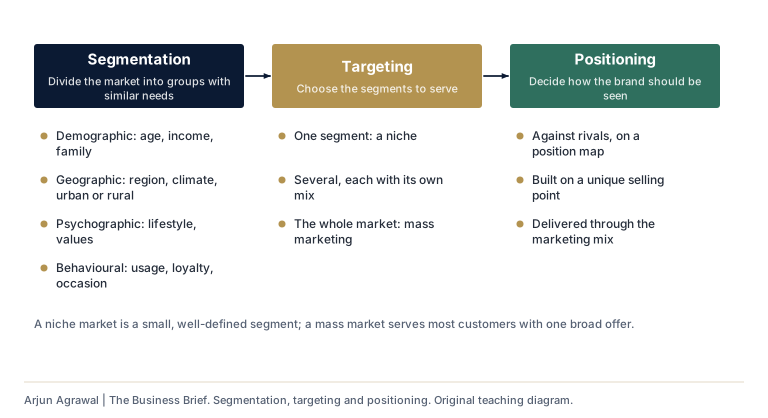
Segmentation, targeting and positioningThree steps. Segmentation: divide the market into groups with similar needs, by demographic factors such as age, income and family, geographic factors such as region and climate, psychographic factors such as lifestyle and values, or behavioural factors such as usage, loyalty and occasion. Targeting: choose the segments to serve, one niche, several each with its own mix, or the whole market through mass marketing. Positioning: decide how the brand should be seen against rivals, on a position map, built on a unique selling point and delivered through the marketing mix.SegmentationDivide the market into groups withsimilar needsDemographic: age, income,familyGeographic: region, climate,urban or ruralPsychographic: lifestyle,valuesBehavioural: usage, loyalty,occasionTargetingChoose the segments to serveOne segment: a nicheSeveral, each with its ownmixThe whole market: massmarketingPositioningDecide how the brand should beseenAgainst rivals, on aposition mapBuilt on a unique sellingpointDelivered through themarketing mixA niche market is a small, well-defined segment; a mass market serves most customers with one broad offer.

Segmentation, targeting and positioning The bases of segmentation and the choices that follow.
Text description

Three steps. Segmentation: divide the market into groups with similar needs, by demographic factors such as age, income and family, geographic factors such as region and climate, psychographic factors such as lifestyle and values, or behavioural factors such as usage, loyalty and occasion. Targeting: choose the segments to serve, one niche, several each with its own mix, or the whole market through mass marketing. Positioning: decide how the brand should be seen against rivals, on a position map, built on a unique selling point and delivered through the marketing mix.

Download SVG

Section 01: Where it is used