
About the creator

Arjun Agrawal

  • IB Diploma Programme educator
  • Economics educator
  • UPSC Economics mentor
  • Resource creator

I teach IB Diploma Programme Economics, Business Management and Global Politics, and I build the resources my own classroom needs. The Business Brief is one of them: a place where business is learned the way it is practised, one decision at a time.

Contact and tutoring Arjun Agrawal Economics (opens in a new tab)

Arjun Agrawal in a light grey blazer and black shirt, smiling, in front of a cabinet of awards and trophies

Section 01: Academic background, and the work since

Education
Economics St. Stephen's College, University of Delhi
Higher education
Assistant Professor Fergusson College, Pune: undergraduate Economics
IB Diploma Programme
Teaching and academic work BLISS International School, Pune; Symbiosis International School, Pune
Subjects
Economics, Business Management, Global Politics Standard and Higher Level
Mentorship
UPSC Civil Services Economics, for aspirants preparing for the examination
Resource design
Handbooks, presentations, Economics in 60 Seconds and three learning platforms

From the creator's published profile, checked 2026-10-29. No role is described as a current post, and the order of the journey below is a story, not a chronology.

Section 02: The journey

From a lecture hall in Delhi to the Diploma Programme classroom, and from there to platforms anyone can open.

  1. Academia

    St. Stephen's College

    University of Delhi

    Economics, studied as a way of arguing before it is a body of content.

  2. Higher education

    Fergusson College

    Pune

    Undergraduate Economics, taught as an Assistant Professor.

  3. IB Diploma Programme

    BLISS and Symbiosis

    International Schools, Pune

    Diploma Programme teaching and academic work across three subjects.

  4. Mentorship

    UPSC Civil Services

    Economics

    Adult learners, a different examination, the same subject.

  5. Digital education

    Three platforms

    Arjun Agrawal Academic Ecosystem

    Economics, Business Management and Political Studies, built to be used by anyone.

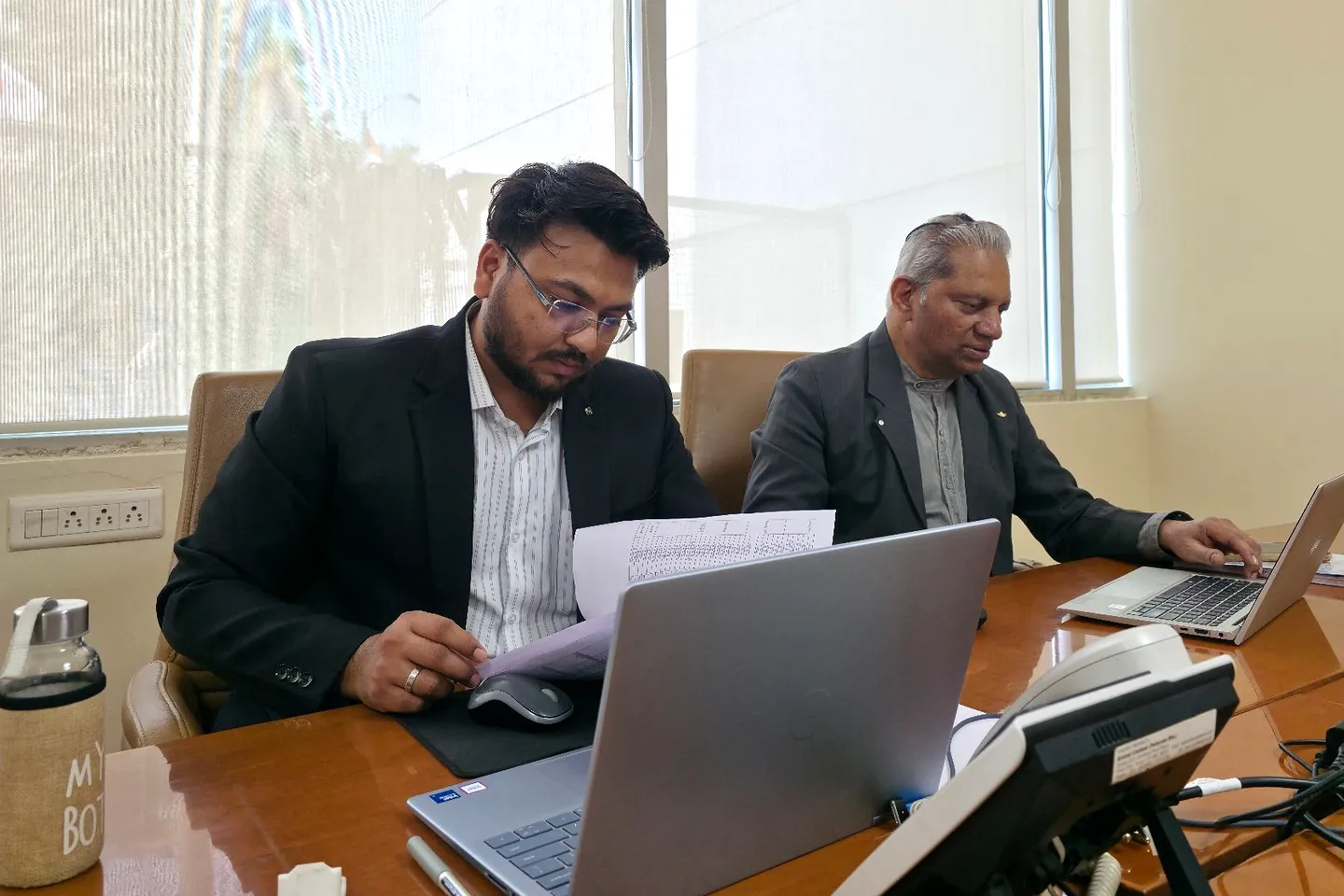
Arjun Agrawal reading through papers at a conference table, while a colleague works on a laptop beside him
Most professional judgement is reading: the evidence first, then the decision.

Section 03: Teaching and academic work

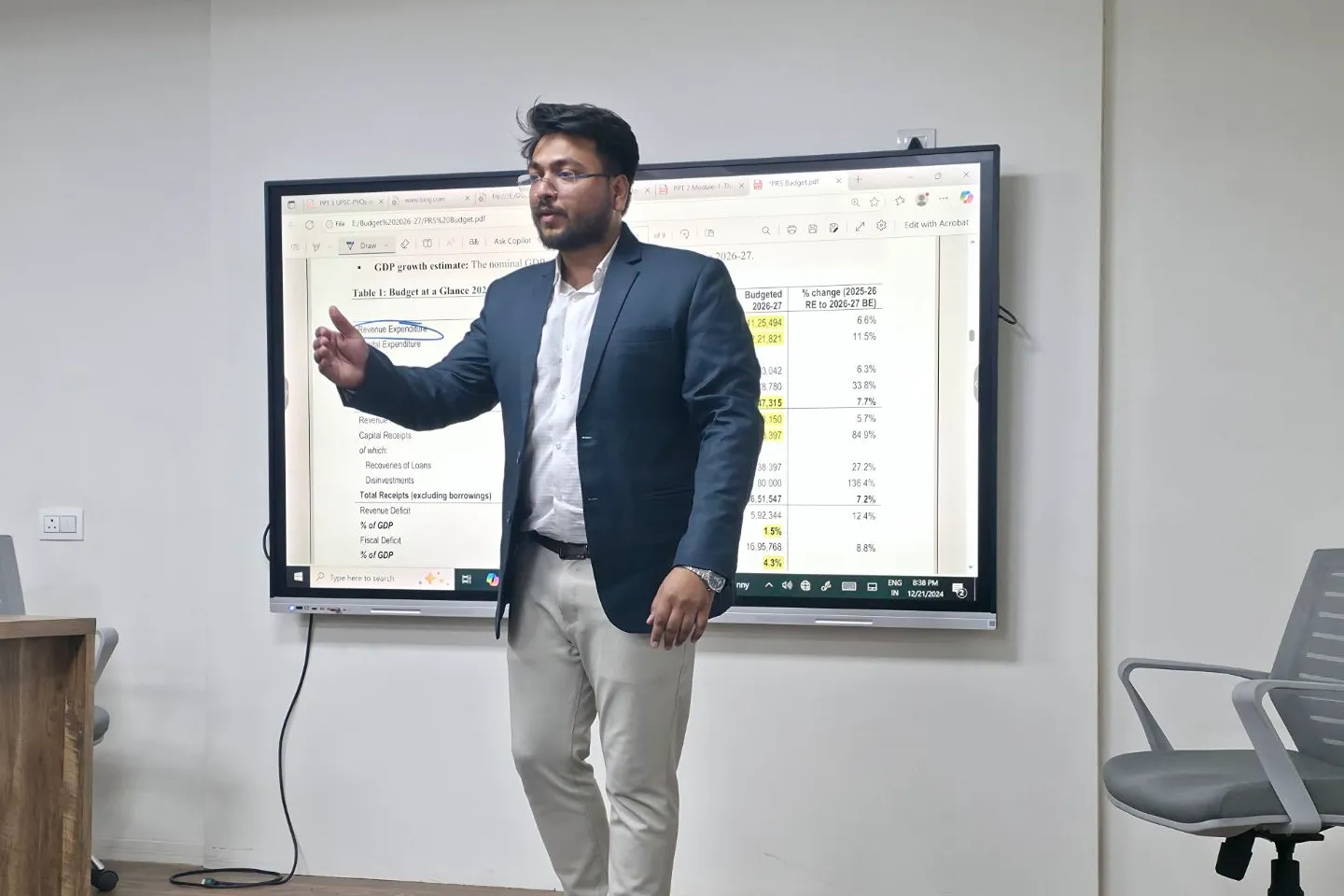
Arjun Agrawal teaching a class, standing in front of a screen showing a budget table
In the classroom: a budget table on the screen, and the question of what it means for the people behind the numbers.

IB Diploma Programme

The Diploma Programme classroom

Teaching and academic work in the IB Diploma Programme, including at BLISS International School, Pune and Symbiosis International School, Pune, across Economics, Business Management and Global Politics at Standard and Higher Level.

The work that shows here is curriculum work of a practical kind: every subtopic of this platform is mapped against the IB Business Management guide, with the guide's page for each claim, and every assessment component is explained from the guide before any strategy is offered.

Higher education

Undergraduate Economics

Teaching undergraduate Economics as an Assistant Professor at Fergusson College, Pune. The distance between knowing a model and using one is where most of the teaching happens, at every level.

Mentorship

UPSC Civil Services, Economics

Mentoring UPSC Civil Services aspirants in Economics: adult learners under time pressure, preparing for a different examination in the same subject. What they need most is the structure of an argument and a way to revise what they already know. No claim is made here about ranks, selections or results.

Section 04: Three subjects, one way of thinking

Economics, Business Management and Global Politics ask the same question in different grammars: who decides, with what information, under what constraints, and who lives with the result. Teaching all three keeps each of them honest.

Economics supplies the mechanism: incentives, costs, markets and the second-round effects that a first answer misses. Global Politics supplies power and legitimacy: who has a voice, and why a decision that works on paper can fail in public. Business Management is where the two meet a single organization with a budget, a deadline and people who have to carry the plan out.

That is why The Business Brief is built around decisions. A student who can read a situation, weigh the evidence and choose, and then say what the choice costs and whom it affects, is doing what the subject asks, in the examination and long after it.

Section 05: How I teach business

Six principles, and the reason each part of this platform exists.

  1. Start with a situation, not a definition.

    A business facing a real choice makes every term earn its place. The definition arrives when it is needed, and it stays.

  2. Evidence before opinion.

    An argument begins with what the data shows and admits what it cannot show. The gap is often the most important finding.

  3. A tool must change a decision.

    A SWOT that changes nothing has cost the time and earned nothing. Use the tool, then say what it changed.

  4. Stakeholders are people.

    Every decision lands on someone: a worker, a customer, a supplier, a town. Ask who gains, who loses and by how much.

  5. Numbers are arguments.

    A ratio or a break-even point is a claim about a business. Calculate it carefully, then say what it means and what it hides.

  6. Judge, and state the condition.

    A good judgement says what the business should do and what would make that answer wrong.

Section 06: Resource development and publishing

Every resource here began as a problem in a real lesson: a handbook to hold a unit together, a presentation that made a mechanism visible, a sixty-second explanation of an economic idea, a question that separated the students who held a concept from those who held only the sentence.

The rule is the same for all of them. A resource has to fit inside a real lesson with a real clock, it has to be accurate before it is attractive, and it has to say what it is: official requirement, examiner emphasis, recommended strategy or illustrative example.

Arjun Agrawal. Knowledge. Insight. Impact.

Section 07: The Arjun Agrawal Knowledge Series

Open resources for learning a subject properly: the reasoning made visible, the sources stated, the practice honest about what it is. The series brings together the handbooks, presentations and Economics in 60 Seconds, and three learning platforms, under one motto: Knowledge. Insight. Impact.

No account, no advertising, no tracking: what you save stays in your own browser.

Section 08: Economics and Business Management, side by side

Two platforms by the same educator, for two subjects that keep borrowing from each other. Economics explains how markets and economies behave; Business Management asks what one organization should do inside them.

Economics

Arjun Agrawal Economics

Think like an economist.

IB Diploma Programme Economics as a system for practising the reasoning the course assesses: models that move, causal chains, real-world cases and examination practice, with a second pathway for UPSC CSE aspirants.

Visit the Economics platform (opens in a new tab)

Shared ground

Business Management: you are here

The Business Brief

Strategy. Leadership. Decisions.

IB Diploma Programme Business Management learned through decisions: topic notes, mindmaps, case studies, live financial tools and an Assessment Centre, with routes for other learners built on the same foundation.

Explore the topic library

The third platform, Political Studies & Global Affairs (opens in a new tab), brings the questions of power and legitimacy that both subjects meet sooner or later. UPSC CSE Indian Polity and International Relations, Political Science and International Relations (PSIR) and IB Diploma Programme Global Politics, read as one connected body of knowledge.

Arjun Agrawal in traditional attire, standing in front of a painted wall

Section 09: A personal note, and how to reach me

I want students to leave a lesson able to do something they could not do when they arrived: read a situation more precisely, weigh an argument more fairly, or make a decision they can defend. Everything on this platform is that lesson, written down, so that anyone can take it.

Arjun Agrawal

Tutoring

One-to-one online tutoring in IB Diploma Programme Business Management, SL and HL: a topic, a paper, guidance on the internal assessment or the whole course. US$20 for a one-hour session.

The tutorials Enquire by email

Contact

For questions about the platform, permissions or accessibility: arjun1agr@gmail.com

The Business Brief is independent and is not affiliated with, endorsed by or connected to the International Baccalaureate Organization. Statements about the IB course carry their sources on the sources page.