Choose a decision to see who gains, who loses and where they conflict.
The decision Automate the packing line Move the factory to a cheaper region Switch to recycled packaging
Automate the packing line
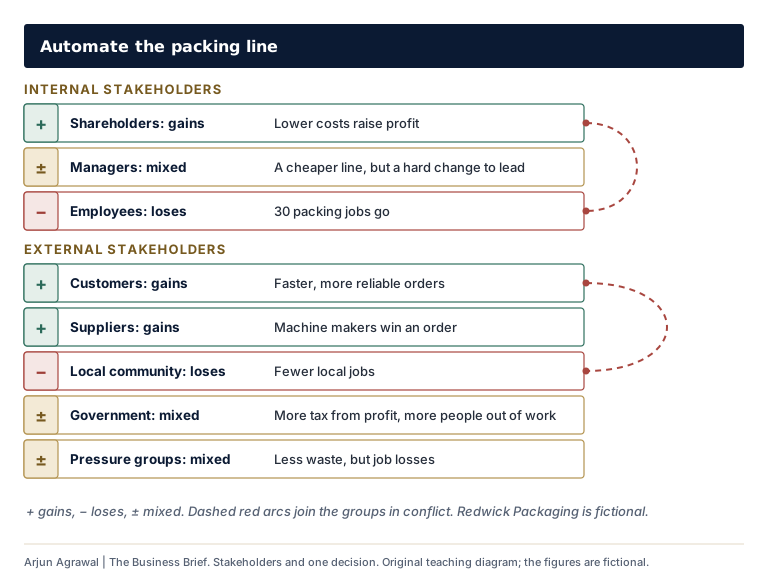
Stakeholders and one decision: automate the packing line. Eight stakeholder groups and one decision, each marked as gaining, losing or mixed, with the main conflicts between them joined by dashed arcs. Redwick Packaging, a fictional manufacturer, considers a decision: automate the packing line. Shareholders: gains, lower costs raise profit. Managers: mixed, a cheaper line, but a hard change to lead. Employees: loses, 30 packing jobs go. Customers: gains, faster, more reliable orders. Suppliers: gains, machine makers win an order. Local community: loses, fewer local jobs. Government: mixed, more tax from profit, more people out of work. Pressure groups: mixed, less waste, but job losses. Conflicts: shareholders against employees; customers against local community. Owners and customers gain from lower costs; employees and the town lose jobs. The conflict is about who bears the cost of efficiency. Automate the packing line INTERNAL STAKEHOLDERS + Shareholders: gains Lower costs raise profit ± Managers: mixed A cheaper line, but a hard change to lead − Employees: loses 30 packing jobs go EXTERNAL STAKEHOLDERS + Customers: gains Faster, more reliable orders + Suppliers: gains Machine makers win an order − Local community: loses Fewer local jobs ± Government: mixed More tax from profit, more people out of work ± Pressure groups: mixed Less waste, but job losses + gains, − loses, ± mixed. Dashed red arcs join the groups in conflict. Redwick Packaging is fictional. Stakeholders and one decision: automate the packing line. Eight stakeholder groups and one decision, each marked as gaining, losing or mixed, with the main conflicts between them joined by dashed arcs. Redwick Packaging, a fictional manufacturer, considers a decision: automate the packing line. Shareholders: gains, lower costs raise profit. Managers: mixed, a cheaper line, but a hard change to lead. Employees: loses, 30 packing jobs go. Customers: gains, faster, more reliable orders. Suppliers: gains, machine makers win an order. Local community: loses, fewer local jobs. Government: mixed, more tax from profit, more people out of work. Pressure groups: mixed, less waste, but job losses. Conflicts: shareholders against employees; customers against local community. Owners and customers gain from lower costs; employees and the town lose jobs. The conflict is about who bears the cost of efficiency. Automate the packing line INTERNAL STAKEHOLDERS + Shareholders: gains Lower costs raise profit ± Managers: mixed A cheaper line, but a hard change to lead − Employees: loses 30 packing jobs go EXTERNAL STAKEHOLDERS + Customers: gains Faster, more reliable orders + Suppliers: gains Machine makers win an order − Local community: loses Fewer local jobs ± Government: mixed More tax from profit, more people out of work ± Pressure groups: mixed Less waste, but job losses Conflicts: Shareholders against employees; Customers against local community. Dashed boxes are in conflict. Owners and customers gain from lower costs; employees and the town lose jobs. The conflict is about who bears the cost of efficiency.
Move the factory to a cheaper region
Stakeholders and one decision: move the factory to a cheaper region. Eight stakeholder groups and one decision, each marked as gaining, losing or mixed, with the main conflicts between them joined by dashed arcs. Redwick Packaging, a fictional manufacturer, considers a decision: move the factory to a cheaper region. Shareholders: gains, lower rent and wages raise profit. Managers: mixed, lower costs, but staff to recruit. Employees: loses, most cannot move with the jobs. Customers: mixed, lower prices, longer deliveries. Suppliers: loses, local suppliers lose the contract. Local community: loses, the old town loses jobs and spending. Government: mixed, jobs move from one region to another. Pressure groups: loses, more lorry miles. Conflicts: shareholders against local community; shareholders against suppliers. The owners gain and the old town loses: a conflict between profit and the business’s place in its community. Move the factory to a cheaper region INTERNAL STAKEHOLDERS + Shareholders: gains Lower rent and wages raise profit ± Managers: mixed Lower costs, but staff to recruit − Employees: loses Most cannot move with the jobs EXTERNAL STAKEHOLDERS ± Customers: mixed Lower prices, longer deliveries − Suppliers: loses Local suppliers lose the contract − Local community: loses The old town loses jobs and spending ± Government: mixed Jobs move from one region to another − Pressure groups: loses More lorry miles + gains, − loses, ± mixed. Dashed red arcs join the groups in conflict. Redwick Packaging is fictional. Stakeholders and one decision: move the factory to a cheaper region. Eight stakeholder groups and one decision, each marked as gaining, losing or mixed, with the main conflicts between them joined by dashed arcs. Redwick Packaging, a fictional manufacturer, considers a decision: move the factory to a cheaper region. Shareholders: gains, lower rent and wages raise profit. Managers: mixed, lower costs, but staff to recruit. Employees: loses, most cannot move with the jobs. Customers: mixed, lower prices, longer deliveries. Suppliers: loses, local suppliers lose the contract. Local community: loses, the old town loses jobs and spending. Government: mixed, jobs move from one region to another. Pressure groups: loses, more lorry miles. Conflicts: shareholders against local community; shareholders against suppliers. The owners gain and the old town loses: a conflict between profit and the business’s place in its community. Move the factory to a cheaper region INTERNAL STAKEHOLDERS + Shareholders: gains Lower rent and wages raise profit ± Managers: mixed Lower costs, but staff to recruit − Employees: loses Most cannot move with the jobs EXTERNAL STAKEHOLDERS ± Customers: mixed Lower prices, longer deliveries − Suppliers: loses Local suppliers lose the contract − Local community: loses The old town loses jobs and spending ± Government: mixed Jobs move from one region to another − Pressure groups: loses More lorry miles Conflicts: Shareholders against local community; Shareholders against suppliers. Dashed boxes are in conflict. The owners gain and the old town loses: a conflict between profit and the business’s place in its community.
Switch to recycled packaging
Stakeholders and one decision: switch to recycled packaging. Eight stakeholder groups and one decision, each marked as gaining, losing or mixed, with the main conflicts between them joined by dashed arcs. Redwick Packaging, a fictional manufacturer, considers a decision: switch to recycled packaging. Shareholders: mixed, higher costs now, a better brand later. Managers: gains, a stronger brand to sell. Employees: gains, pride in the work. Customers: mixed, a greener product at a higher price. Suppliers: mixed, new suppliers win; old ones lose. Local community: gains, less waste to landfill. Government: gains, helps meet waste targets. Pressure groups: gains, a goal of their campaign met. Conflicts: shareholders against pressure groups. Most groups gain, but shareholders and customers pay more for now: a trade-off between short-term profit and corporate social responsibility. Switch to recycled packaging INTERNAL STAKEHOLDERS ± Shareholders: mixed Higher costs now, a better brand later + Managers: gains A stronger brand to sell + Employees: gains Pride in the work EXTERNAL STAKEHOLDERS ± Customers: mixed A greener product at a higher price ± Suppliers: mixed New suppliers win; old ones lose + Local community: gains Less waste to landfill + Government: gains Helps meet waste targets + Pressure groups: gains A goal of their campaign met + gains, − loses, ± mixed. Dashed red arcs join the groups in conflict. Redwick Packaging is fictional. Stakeholders and one decision: switch to recycled packaging. Eight stakeholder groups and one decision, each marked as gaining, losing or mixed, with the main conflicts between them joined by dashed arcs. Redwick Packaging, a fictional manufacturer, considers a decision: switch to recycled packaging. Shareholders: mixed, higher costs now, a better brand later. Managers: gains, a stronger brand to sell. Employees: gains, pride in the work. Customers: mixed, a greener product at a higher price. Suppliers: mixed, new suppliers win; old ones lose. Local community: gains, less waste to landfill. Government: gains, helps meet waste targets. Pressure groups: gains, a goal of their campaign met. Conflicts: shareholders against pressure groups. Most groups gain, but shareholders and customers pay more for now: a trade-off between short-term profit and corporate social responsibility. Switch to recycled packaging INTERNAL STAKEHOLDERS ± Shareholders: mixed Higher costs now, a better brand later + Managers: gains A stronger brand to sell + Employees: gains Pride in the work EXTERNAL STAKEHOLDERS ± Customers: mixed A greener product at a higher price ± Suppliers: mixed New suppliers win; old ones lose + Local community: gains Less waste to landfill + Government: gains Helps meet waste targets + Pressure groups: gains A goal of their campaign met Conflicts: Shareholders against pressure groups. Dashed boxes are in conflict. Most groups gain, but shareholders and customers pay more for now: a trade-off between short-term profit and corporate social responsibility.
Stakeholders and one decision Who gains and who loses from three decisions at a fictional manufacturer, and where they conflict. Text description Redwick Packaging, a fictional manufacturer, considers a decision: automate the packing line. Shareholders: gains, lower costs raise profit. Managers: mixed, a cheaper line, but a hard change to lead. Employees: loses, 30 packing jobs go. Customers: gains, faster, more reliable orders. Suppliers: gains, machine makers win an order. Local community: loses, fewer local jobs. Government: mixed, more tax from profit, more people out of work. Pressure groups: mixed, less waste, but job losses. Conflicts: shareholders against employees; customers against local community. Owners and customers gain from lower costs; employees and the town lose jobs. The conflict is about who bears the cost of efficiency.
Download SVG
Print