Diagram · Unit 2 · 2.3
Leadership styles compared
Choose two styles to compare; the facts that differ are marked.
Compare two leadership styles
Choose two different ones to compare.
Autocratic
- Who decides differs
- The leader, alone
- Staff involvement differs
- Little: staff carry out instructions
- Communication differs
- One way, downward
- Speed of decisions differs
- Fast
- Suits differs
- A crisis, a simple or dangerous task, people new to the work
- Risks differs
- Low morale and commitment; ideas from staff go unheard
Paternalistic
- Who decides differs
- The leader, alone, after hearing staff
- Staff involvement differs
- Consulted and cared for, but not deciding
- Communication differs
- Mostly downward, with views heard upward
- Speed of decisions differs
- Fairly fast
- Suits differs
- Staff who value security and trust the leader
- Risks differs
- Dependence on the leader; staff may feel talked down to
Democratic
- Who decides differs
- The leader with the team, sometimes by a vote
- Staff involvement differs
- High: staff shape the decision
- Communication differs
- Two way, and across the team
- Speed of decisions differs
- Slower
- Suits differs
- People with knowledge to contribute, where commitment matters
- Risks differs
- Slow decisions; a split team; too slow for a crisis
Laissez-faire
- Who decides differs
- The team
- Staff involvement differs
- Very high: staff organize themselves
- Communication differs
- Mostly within the team
- Speed of decisions differs
- Depends on the team
- Suits differs
- An expert, motivated team that works best with autonomy
- Risks differs
- Drift, unclear roles and missed deadlines if the team is not ready
Situational
- Who decides differs
- It varies: the style follows the situation
- Staff involvement differs
- Grows as the team grows more capable
- Communication differs
- Matched to the style in use
- Speed of decisions differs
- Fast when it must be, slower when it can be
- Suits differs
- Teams and tasks that differ, as two shifts or two projects do
- Risks differs
- Can look inconsistent; needs a leader who reads situations well
Text description
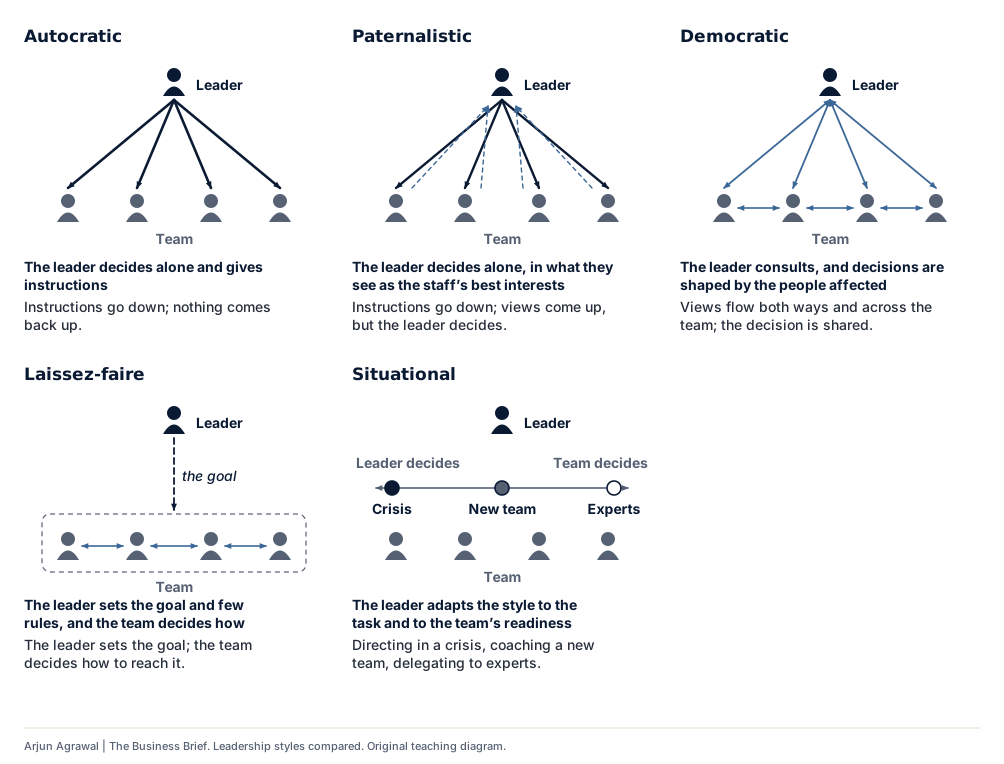
The five leadership styles in the guide, each drawn as a leader and a team with the direction of communication. Autocratic: the leader decides alone and gives instructions. Who decides: the leader, alone; Staff involvement: little: staff carry out instructions; Communication: one way, downward; Speed of decisions: fast; Suits: a crisis, a simple or dangerous task, people new to the work; Risks: low morale and commitment; ideas from staff go unheard. Paternalistic: the leader decides alone, in what they see as the staff’s best interests. Who decides: the leader, alone, after hearing staff; Staff involvement: consulted and cared for, but not deciding; Communication: mostly downward, with views heard upward; Speed of decisions: fairly fast; Suits: staff who value security and trust the leader; Risks: dependence on the leader; staff may feel talked down to. Democratic: the leader consults, and decisions are shaped by the people affected. Who decides: the leader with the team, sometimes by a vote; Staff involvement: high: staff shape the decision; Communication: two way, and across the team; Speed of decisions: slower; Suits: people with knowledge to contribute, where commitment matters; Risks: slow decisions; a split team; too slow for a crisis. Laissez-faire: the leader sets the goal and few rules, and the team decides how. Who decides: the team; Staff involvement: very high: staff organize themselves; Communication: mostly within the team; Speed of decisions: depends on the team; Suits: an expert, motivated team that works best with autonomy; Risks: drift, unclear roles and missed deadlines if the team is not ready. Situational: the leader adapts the style to the task and to the team’s readiness. Who decides: it varies: the style follows the situation; Staff involvement: grows as the team grows more capable; Communication: matched to the style in use; Speed of decisions: fast when it must be, slower when it can be; Suits: teams and tasks that differ, as two shifts or two projects do; Risks: can look inconsistent; needs a leader who reads situations well.
Section 01: Where it is used
- 2.3 Leadership and management On the subtopic’s page, with its other diagrams
Arjun Agrawal | The Business Brief, https://the-business-brief-dun.vercel.app/diagrams/leadership-compare/. Original teaching material, not an IB publication. The organizations in the teaching cases are fictional unless a case says otherwise.