Diagram · Unit 2 · 2.3

Leadership styles

SL and HL
Leadership stylesA line from the leader decides to the team decides, with four styles placed along it. Autocratic: decides alone and gives instructions, fast and clear in a crisis but with little say for staff. Paternalistic: decides, but in what the leader sees as staff’s best interests, explaining and caring for them. Democratic: consults and lets staff share decisions, which builds commitment but is slower. Laissez-faire: sets the goal and leaves staff to decide how, which suits experts but risks drift. Situational leadership moves along the line to suit the task, the team and the situation.The leader decidesThe team decidesAutocraticDecides alone and givesinstructions. Fast andclear in a crisis; littlesay for staff.PaternalisticDecides, but in what theysee as staff’s bestinterests, explaining andcaring for them.DemocraticConsults and lets staffshare decisions. Buildscommitment; slower.Laissez-faireSets the goal and leavesstaff to decide how.Suits experts; risksdrift.Situational leadership: moving along the line to suit the task, the team and the situationThe five styles named in the guide. Placing them on one line is a teaching aid: paternalistic leaders decide much asautocratic ones do, but with care for the people affected.
Leadership stylesA line from the leader decides to the team decides, with four styles placed along it. Autocratic: decides alone and gives instructions, fast and clear in a crisis but with little say for staff. Paternalistic: decides, but in what the leader sees as staff’s best interests, explaining and caring for them. Democratic: consults and lets staff share decisions, which builds commitment but is slower. Laissez-faire: sets the goal and leaves staff to decide how, which suits experts but risks drift. Situational leadership moves along the line to suit the task, the team and the situation.The leader decidesAutocraticDecides alone and givesinstructions. Fast and clear ina crisis; little say for staff.PaternalisticDecides, but in what they see asstaff’s best interests,explaining and caring for them.DemocraticConsults and lets staff sharedecisions. Builds commitment;slower.Laissez-faireSets the goal and leaves staffto decide how. Suits experts;risks drift.The team decidesSituational leadershipMoving along the line to suit thetask, the team and the situationThe five styles named in the guide.Paternalistic leaders decide much asautocratic ones do, but with care forthe people affected.

Leadership styles The five styles in the guide, from the leader deciding to the team deciding.
Text description

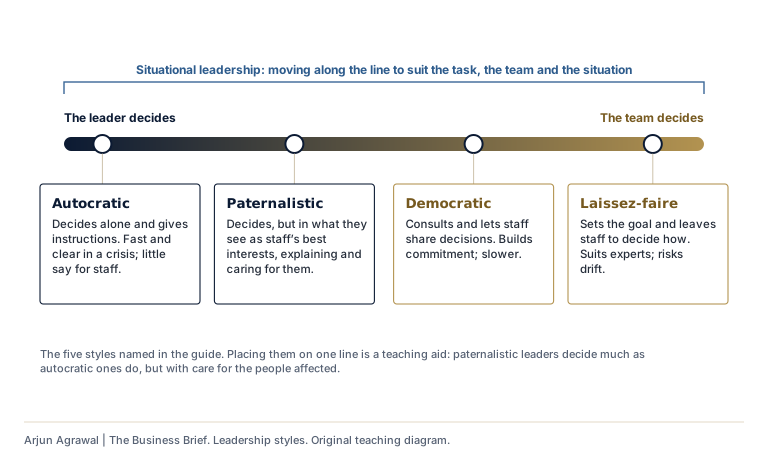
A line from the leader decides to the team decides, with four styles placed along it. Autocratic: decides alone and gives instructions, fast and clear in a crisis but with little say for staff. Paternalistic: decides, but in what the leader sees as staff’s best interests, explaining and caring for them. Democratic: consults and lets staff share decisions, which builds commitment but is slower. Laissez-faire: sets the goal and leaves staff to decide how, which suits experts but risks drift. Situational leadership moves along the line to suit the task, the team and the situation.

Download SVG

Section 01: Where it is used