Diagram · Unit 3 · 3.2
Choosing a source of finance
Open or close each question to follow one path; each source opens its glossary entry.
What is the money for?
Day-to-day spending, or a short gap in cash
Revenue expenditure: match it with short-term finance.
- OverdraftSpend beyond the bank balance up to a limit: flexible, but the interest is high and the bank can withdraw it.
- Trade creditPay suppliers later, often 30 to 90 days: no interest, but a discount for paying early may be lost.
A long-term asset, such as machinery, or expansion
Capital expenditure: match it with long-term finance.
Can the business pay for it from within?
Yes
Internal sources: no interest, and no one else gains a say.
- Retained profitProfit kept in the business rather than paid to the owners: cheap, but it may not be enough, and owners give up dividends.
- Sale of assetsSelling what the business no longer needs: quick cash, but only once.
- Personal fundsA sole trader’s own savings: no cost and no one to answer to, but limited and at the owner’s risk.
No: it must come from outside
Will the owners share ownership and control?
Yes
Equity: no interest or repayment, but new owners share the profit and the say.
- Share capitalSelling shares, for a company only: large sums that never need repaying, at the cost of control and dividends.
- Business angelsWealthy individuals who invest in small, promising firms for a share, often with advice and contacts.
No: the owners keep control
Does the business need to own the asset?
No: using it is enough
- LeasingPaying to use an asset owned by someone else: no large sum up front and repairs are often included, but it costs more over time.
Yes
Can it borrow from a bank?
Yes
- Loan capitalA loan repaid with interest over an agreed term, usually against security: the owners keep control, but the repayments are due whatever happens.
No: too small, too new or no security
- Microfinance providersSmall loans for people and small firms that banks will not serve: they open finance to the excluded, though rates can be high.
- CrowdfundingMany people each give a little online, for rewards, a share or interest: it also tests demand, but the plan becomes public and may not reach its target.
Text description
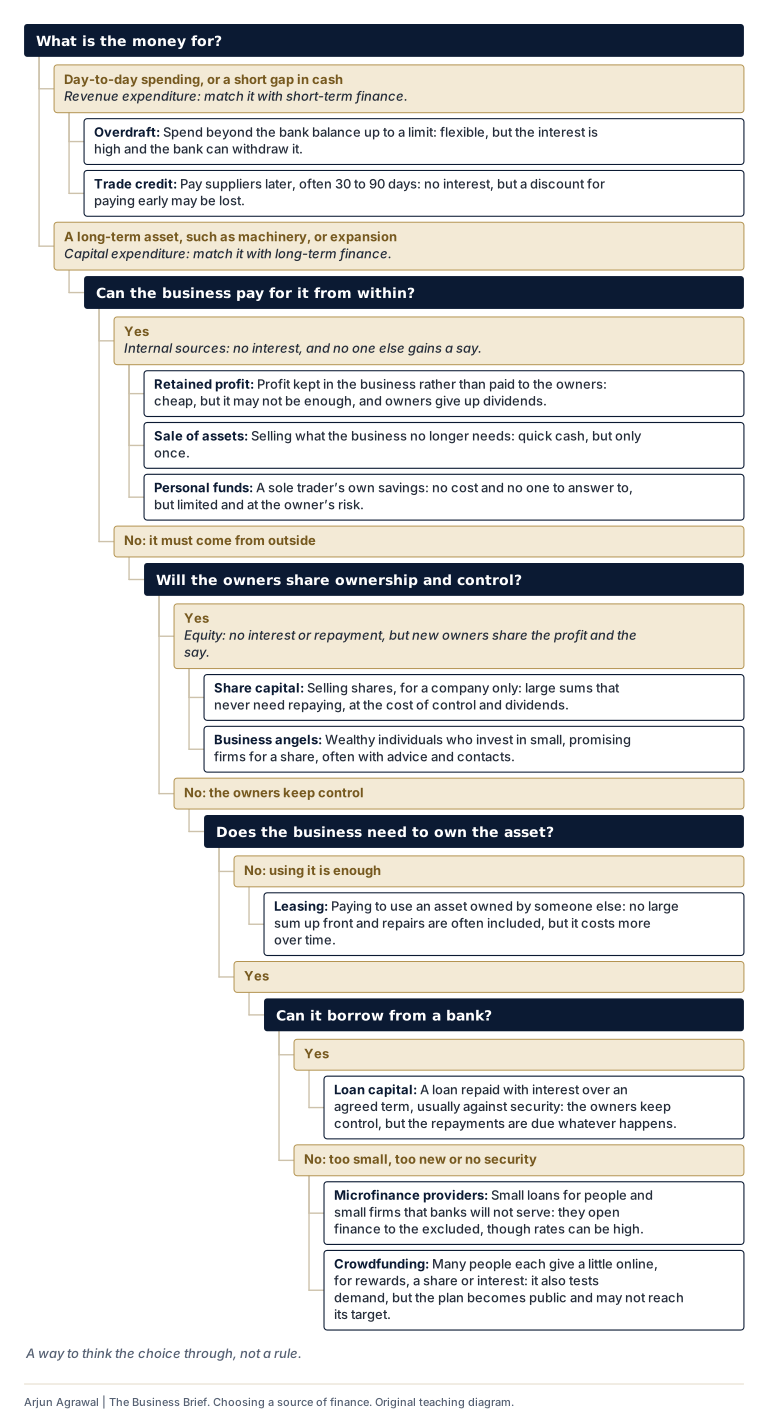
A decision tree for choosing a source of finance. Question: What is the money for? Answer: Day-to-day spending, or a short gap in cash. Revenue expenditure: match it with short-term finance. Overdraft: Spend beyond the bank balance up to a limit: flexible, but the interest is high and the bank can withdraw it. Trade credit: Pay suppliers later, often 30 to 90 days: no interest, but a discount for paying early may be lost. Answer: A long-term asset, such as machinery, or expansion. Capital expenditure: match it with long-term finance. Question: Can the business pay for it from within? Answer: Yes. Internal sources: no interest, and no one else gains a say. Retained profit: Profit kept in the business rather than paid to the owners: cheap, but it may not be enough, and owners give up dividends. Sale of assets: Selling what the business no longer needs: quick cash, but only once. Personal funds: A sole trader’s own savings: no cost and no one to answer to, but limited and at the owner’s risk. Answer: No: it must come from outside Question: Will the owners share ownership and control? Answer: Yes. Equity: no interest or repayment, but new owners share the profit and the say. Share capital: Selling shares, for a company only: large sums that never need repaying, at the cost of control and dividends. Business angels: Wealthy individuals who invest in small, promising firms for a share, often with advice and contacts. Answer: No: the owners keep control Question: Does the business need to own the asset? Answer: No: using it is enough Leasing: Paying to use an asset owned by someone else: no large sum up front and repairs are often included, but it costs more over time. Answer: Yes Question: Can it borrow from a bank? Answer: Yes Loan capital: A loan repaid with interest over an agreed term, usually against security: the owners keep control, but the repayments are due whatever happens. Answer: No: too small, too new or no security Microfinance providers: Small loans for people and small firms that banks will not serve: they open finance to the excluded, though rates can be high. Crowdfunding: Many people each give a little online, for rewards, a share or interest: it also tests demand, but the plan becomes public and may not reach its target. The tree is a way to think a decision through, not a rule: real decisions also weigh the cost, the risk, the amount and how quickly the money is needed.
Section 01: Where it is used
- 3.2 Sources of finance On the subtopic’s page, with its other diagrams
Arjun Agrawal | The Business Brief, https://the-business-brief-dun.vercel.app/diagrams/finance-decision-tree/. Original teaching material, not an IB publication. The organizations in the teaching cases are fictional unless a case says otherwise.