Diagram · Unit 1 · 1.2
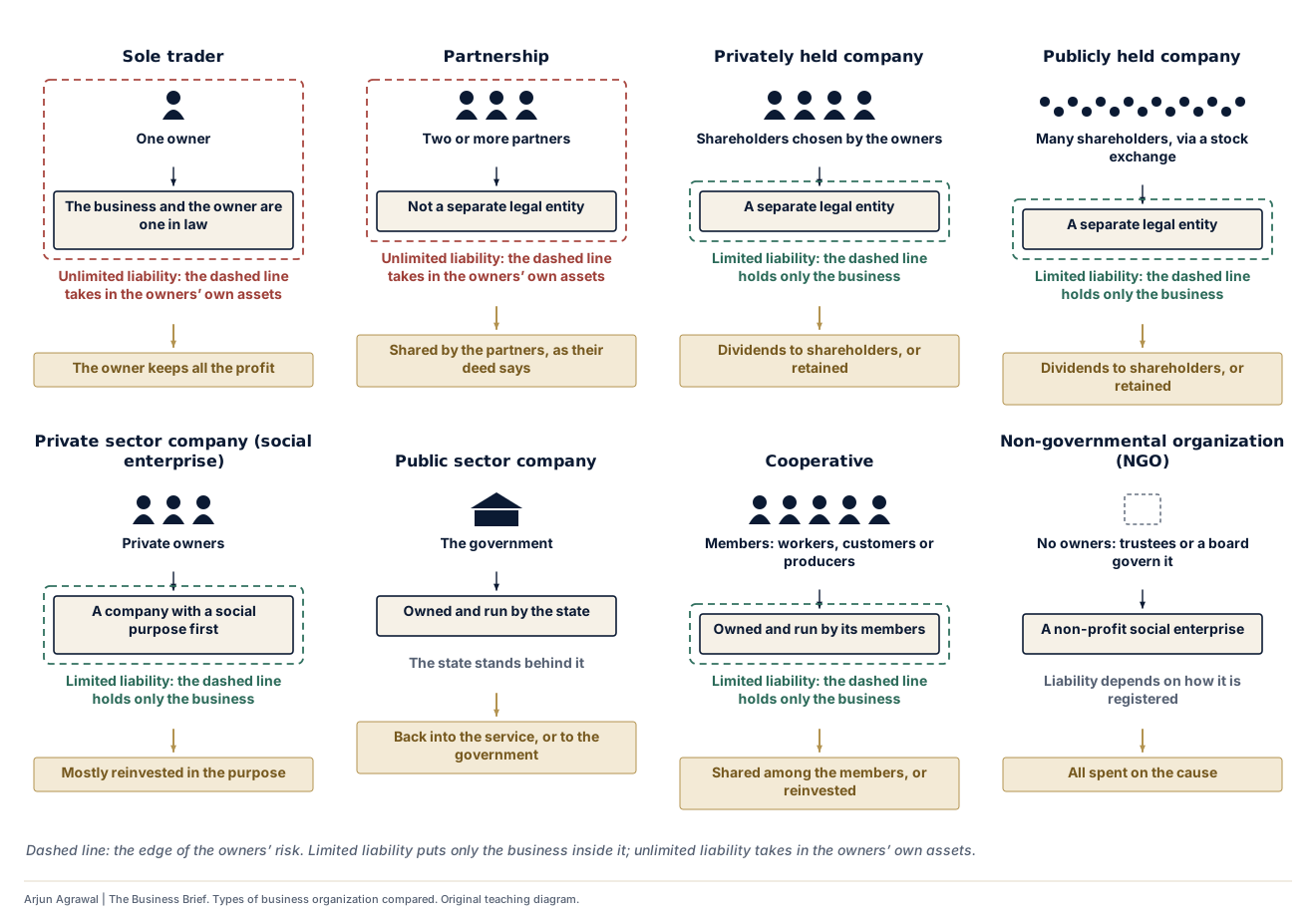
Types of business organization compared
Choose two types to compare; the facts that differ are marked.
Compare two types of organization
Choose two different ones to compare.
Sole trader
- Owned by differs
- One person, who may employ staff
- Liability differs
- Unlimited: the owner’s personal assets are at risk
- Finance differs
- Personal funds, loans, overdrafts, trade credit
- Profit goes to differs
- The owner
- Control differs
- The owner decides everything
- Accounts differs
- Private, apart from tax returns
Partnership
- Owned by differs
- Two or more partners
- Liability differs
- Usually unlimited, even for a fellow partner’s debts
- Finance differs
- The partners’ capital, loans, overdrafts
- Profit goes to differs
- The partners, as the deed of partnership sets out
- Control differs
- Shared by the partners
- Accounts differs
- Usually private
Privately held company
- Owned by differs
- Shareholders; shares are not sold to the public
- Liability differs
- Limited: shareholders can lose only what they paid for their shares
- Finance differs
- Share capital from chosen investors, loans, retained profit
- Profit goes to differs
- Dividends to shareholders, or kept in the business
- Control differs
- Directors appointed by the shareholders, often the same people
- Accounts differs
- Usually filed publicly
Publicly held company
- Owned by differs
- Anyone who buys its shares on a stock exchange
- Liability differs
- Limited
- Finance differs
- Large sums from selling shares to the public, loans, retained profit
- Profit goes to differs
- Dividends to shareholders, or kept in the business
- Control differs
- Directors and managers: ownership and control are divorced
- Accounts differs
- Published in full and independently audited
Private sector company (social enterprise)
- Owned by differs
- Private owners
- Liability differs
- Limited, as in any company
- Finance differs
- Trading income, owners’ capital, loans, impact investors
- Profit goes to differs
- Mostly back into its social or environmental purpose
- Control differs
- Directors, guided by the mission
- Accounts differs
- As for any company
Public sector company
- Owned by differs
- The government
- Liability differs
- The state stands behind it
- Finance differs
- Trading income and government funds
- Profit goes to differs
- Back into the service, or to the government
- Control differs
- Managers answerable to the government
- Accounts differs
- Reported to the government and the public
Cooperative
- Owned by differs
- Its members: the people who work in it, buy from it or supply it
- Liability differs
- Usually limited
- Finance differs
- Members’ contributions, loans, retained surplus; no shares sold to outsiders
- Profit goes to differs
- The members, usually by how much each traded or worked, or back into the business
- Control differs
- Democratic: normally one member, one vote
- Accounts differs
- Reported to the members
Non-governmental organization (NGO)
- Owned by differs
- No one takes a share: trustees or a board govern it
- Liability differs
- Depends on how it is registered
- Finance differs
- Donations, grants, some trading income
- Profit goes to differs
- Its cause: no surplus is paid out
- Control differs
- Trustees or a board, independent of government
- Accounts differs
- Reported to donors and regulators, often published
Text description
The types of business organization the guide names, each drawn the same way: its owners above, the business, a dashed line marking the edge of the owners’ risk, and where its profit or surplus goes. Sole trader: owned by one person, who may employ staff; liability unlimited: the owner’s personal assets are at risk; finance personal funds, loans, overdrafts, trade credit; profit goes to the owner; control the owner decides everything; accounts private, apart from tax returns. Partnership: owned by two or more partners; liability usually unlimited, even for a fellow partner’s debts; finance the partners’ capital, loans, overdrafts; profit goes to the partners, as the deed of partnership sets out; control shared by the partners; accounts usually private. Privately held company: owned by shareholders; shares are not sold to the public; liability limited: shareholders can lose only what they paid for their shares; finance share capital from chosen investors, loans, retained profit; profit goes to dividends to shareholders, or kept in the business; control directors appointed by the shareholders, often the same people; accounts usually filed publicly. Publicly held company: owned by anyone who buys its shares on a stock exchange; liability limited; finance large sums from selling shares to the public, loans, retained profit; profit goes to dividends to shareholders, or kept in the business; control directors and managers: ownership and control are divorced; accounts published in full and independently audited. Private sector company (social enterprise): owned by private owners; liability limited, as in any company; finance trading income, owners’ capital, loans, impact investors; profit goes to mostly back into its social or environmental purpose; control directors, guided by the mission; accounts as for any company. Public sector company: owned by the government; liability the state stands behind it; finance trading income and government funds; profit goes to back into the service, or to the government; control managers answerable to the government; accounts reported to the government and the public. Cooperative: owned by its members: the people who work in it, buy from it or supply it; liability usually limited; finance members’ contributions, loans, retained surplus; no shares sold to outsiders; profit goes to the members, usually by how much each traded or worked, or back into the business; control democratic: normally one member, one vote; accounts reported to the members. Non-governmental organization (NGO): owned by no one takes a share: trustees or a board govern it; liability depends on how it is registered; finance donations, grants, some trading income; profit goes to its cause: no surplus is paid out; control trustees or a board, independent of government; accounts reported to donors and regulators, often published.
Section 01: Where it is used
- 1.2 Types of business entities On the subtopic’s page, with its other diagrams
Arjun Agrawal | The Business Brief, https://the-business-brief-dun.vercel.app/diagrams/entity-comparison/. Original teaching material, not an IB publication. The organizations in the teaching cases are fictional unless a case says otherwise.