Diagram · Unit 5 · 5.2
Operations methods compared
Choose two methods to compare; the facts that differ are marked.
Compare two operations methods
Choose two different ones to compare.
Job production
- Volume differs
- One, or a very few
- Variety differs
- Every item different
- Cost per unit differs
- High
- Labour differs
- Highly skilled, doing many tasks
- Flexibility differs
- Very high
- Example differs
- A wedding dress, a bridge, a website
Batch production
- Volume differs
- Medium
- Variety differs
- Some: each batch can differ
- Cost per unit differs
- Medium
- Labour differs
- Semi-skilled
- Flexibility differs
- Medium: machines are reset between batches
- Example differs
- Bread baked in batches of one type, then another
Mass or flow production
- Volume differs
- Very high
- Variety differs
- Little or none
- Cost per unit differs
- Low: economies of scale
- Labour differs
- Repetitive tasks, or automated
- Flexibility differs
- Low: a costly line built for one product
- Example differs
- Soft drinks, light bulbs, screws
Mass customization
- Volume differs
- High
- Variety differs
- High: each customer’s choice
- Cost per unit differs
- Low to medium
- Labour differs
- Skilled, working with flexible technology
- Flexibility differs
- High, within a set range of options
- Example differs
- Trainers or laptops built to a customer’s choices
Text description
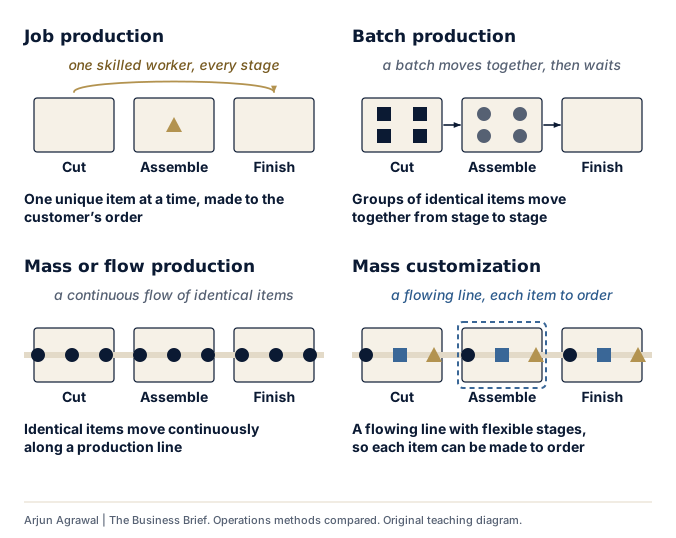
The four operations methods in the guide, each drawn as items moving through three stages, cut, assemble and finish. Job production: one unique item at a time, made to the customer’s order. Volume: one, or a very few; Variety: every item different; Cost per unit: high; Labour: highly skilled, doing many tasks; Flexibility: very high; Example: a wedding dress, a bridge, a website. Batch production: groups of identical items move together from stage to stage. Volume: medium; Variety: some: each batch can differ; Cost per unit: medium; Labour: semi-skilled; Flexibility: medium: machines are reset between batches; Example: bread baked in batches of one type, then another. Mass or flow production: identical items move continuously along a production line. Volume: very high; Variety: little or none; Cost per unit: low: economies of scale; Labour: repetitive tasks, or automated; Flexibility: low: a costly line built for one product; Example: soft drinks, light bulbs, screws. Mass customization: a flowing line with flexible stages, so each item can be made to order. Volume: high; Variety: high: each customer’s choice; Cost per unit: low to medium; Labour: skilled, working with flexible technology; Flexibility: high, within a set range of options; Example: trainers or laptops built to a customer’s choices.
Section 01: Where it is used
- 5.2 Operations methods On the subtopic’s page, with its other diagrams
Arjun Agrawal | The Business Brief, https://the-business-brief-dun.vercel.app/diagrams/operations-compare/. Original teaching material, not an IB publication. The organizations in the teaching cases are fictional unless a case says otherwise.