Diagram · Unit 2 · 2.7

Conflict and resolution at work

HL only
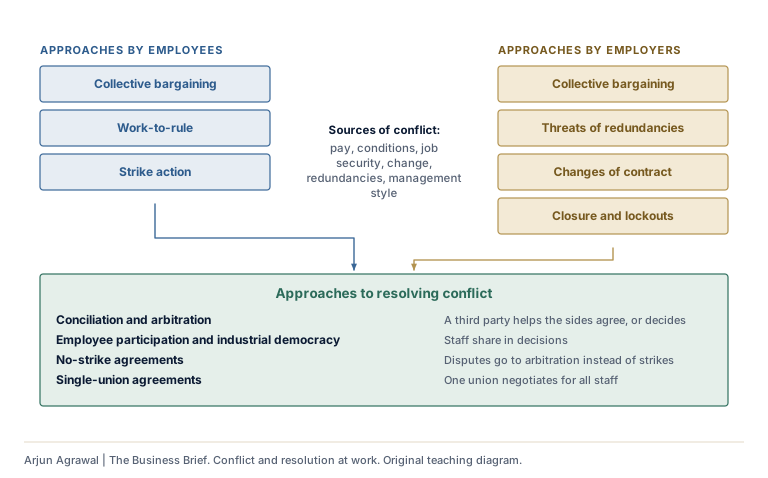
Conflict and its resolution in the workplaceSources of conflict include pay, conditions, job security, change, redundancies and management style. Employees may respond with collective bargaining, work-to-rule or strike action. Employers may respond with collective bargaining, threats of redundancies, changes of contract, or closure and lockouts. Both lead towards approaches to resolving conflict: conciliation and arbitration, where a third party helps the sides agree or decides; employee participation and industrial democracy, where staff share in decisions; no-strike agreements; and single-union agreements.APPROACHES BY EMPLOYEESCollective bargainingWork-to-ruleStrike actionAPPROACHES BY EMPLOYERSCollective bargainingThreats of redundanciesChanges of contractClosure and lockoutsSources of conflict:pay, conditions, jobsecurity, change,redundancies, managementstyleApproaches to resolving conflictConciliation and arbitrationA third party helps the sides agree, or decidesEmployee participation and industrial democracyStaff share in decisionsNo-strike agreementsDisputes go to arbitration instead of strikesSingle-union agreementsOne union negotiates for all staff

Conflict and resolution at work HL Approaches by employees and employers, and the routes to agreement.
Text description

Sources of conflict include pay, conditions, job security, change, redundancies and management style. Employees may respond with collective bargaining, work-to-rule or strike action. Employers may respond with collective bargaining, threats of redundancies, changes of contract, or closure and lockouts. Both lead towards approaches to resolving conflict: conciliation and arbitration, where a third party helps the sides agree or decides; employee participation and industrial democracy, where staff share in decisions; no-strike agreements; and single-union agreements.

Download SVG

Section 01: Where it is used